
In leading the Starship Enterprise to “boldly go where no man has gone before,” Captain James T. Kirk (William Shatner) taught sci-fi audiences invaluable lessons throughout Star Trek. His empathy and compassion, combined with his keen intelligence, often shaped a worldview that reflected humanity’s best qualities. As a result, the commander’s most memorable quotes envisioned a utopian future where everyone was welcome.
For example, in Star Trek Season 3, Episode 10, “Plato’s Stepchildren,” Captain Kirk delivered one of his most iconic speeches. By comforting a vulnerable alien on a distant planet, Captain Kirk gave a remarkable monologue that perfectly encapsulated Star Trek‘s entire philosophy. Roughly 58 years later, the telling line remains one of Kirk’s most intelligent exchanges, underscoring his entire mission as a space explorer.
Captain Kirk Advocated for Inclusivity in His Most Intelligent ‘Star Trek’ Quote
Star Trek Season 3, Episode 10, “Plato’s Stepchildren,” aired on NBC on Nov. 22, 1968. The story followed the USS Enterprise as it answered a distress call from a distant alien planet. Upon arrival, Captain Kirk and his crew encountered Alexander (Michael Dunn), a kind person of short stature ostracized by his race, the Platonians, for lacking telekinetic powers.
After Kirk saved Alexander from danger, the Platonian expressed gratitude. The two went on to have a heart-to-heart conversation, and Kirk asked Alexander if there were more Platonians like him. “What do you mean, like me?” Alexander responded, getting defensive. Kirk retorted, “Who don’t have a psychokinetic ability?” Alexander then admitted, “Oh, I thought you were talking about my size.“
Alexander went on to reveal that his race made fun of him for his height, which caused him deep pain and insecurity. “I was brought here as a court buffoon,” he explained. “That’s why I’m everybody’s slave, and I never do anything right.”
Moments later, Alexander asked Kirk if planet Earth had people without telekinetic powers who were his size. Kirk leaned in and stated:
“Alexander, where I come from, size, shape, or color makes no difference, and nobody has the power.”
Captain Kirk’s telling quote brilliantly symbolized Star Trek‘s entire ethos of equality and inclusion. From Kirk’s perspective, humans of the future were not judged by skin color or physical stature. The implication is that they were judged by the content of their character, echoing the sentiment famously conveyed by Reverend Martin Luther King Jr. in his iconic “I Have a Dream” speech during the 1963 March on Washington.
“Plato’s Stepchildren” Was Most Notable for Its Interracial Kiss
-
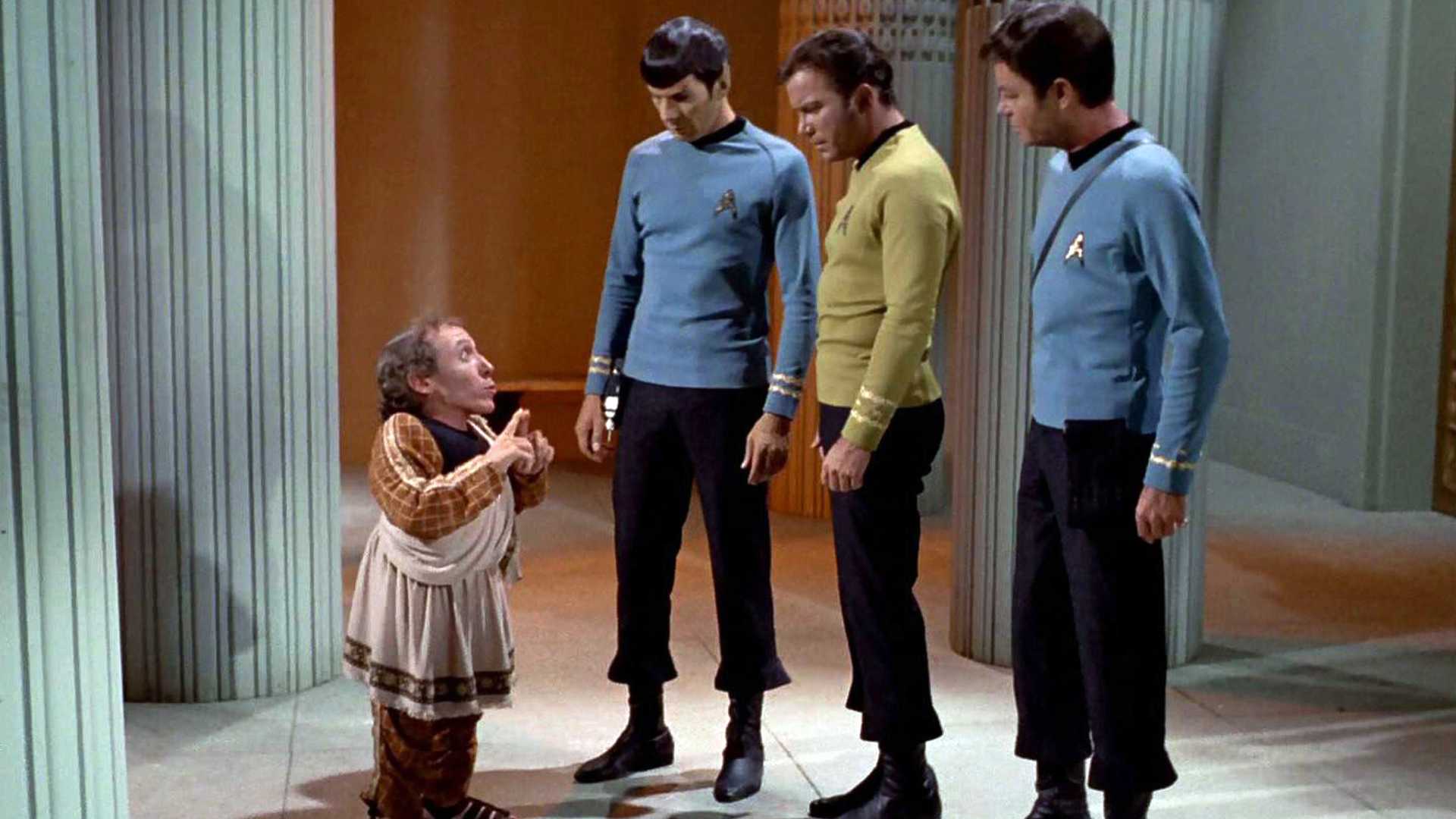
Alexander greets the crew in Star Trek NBC -
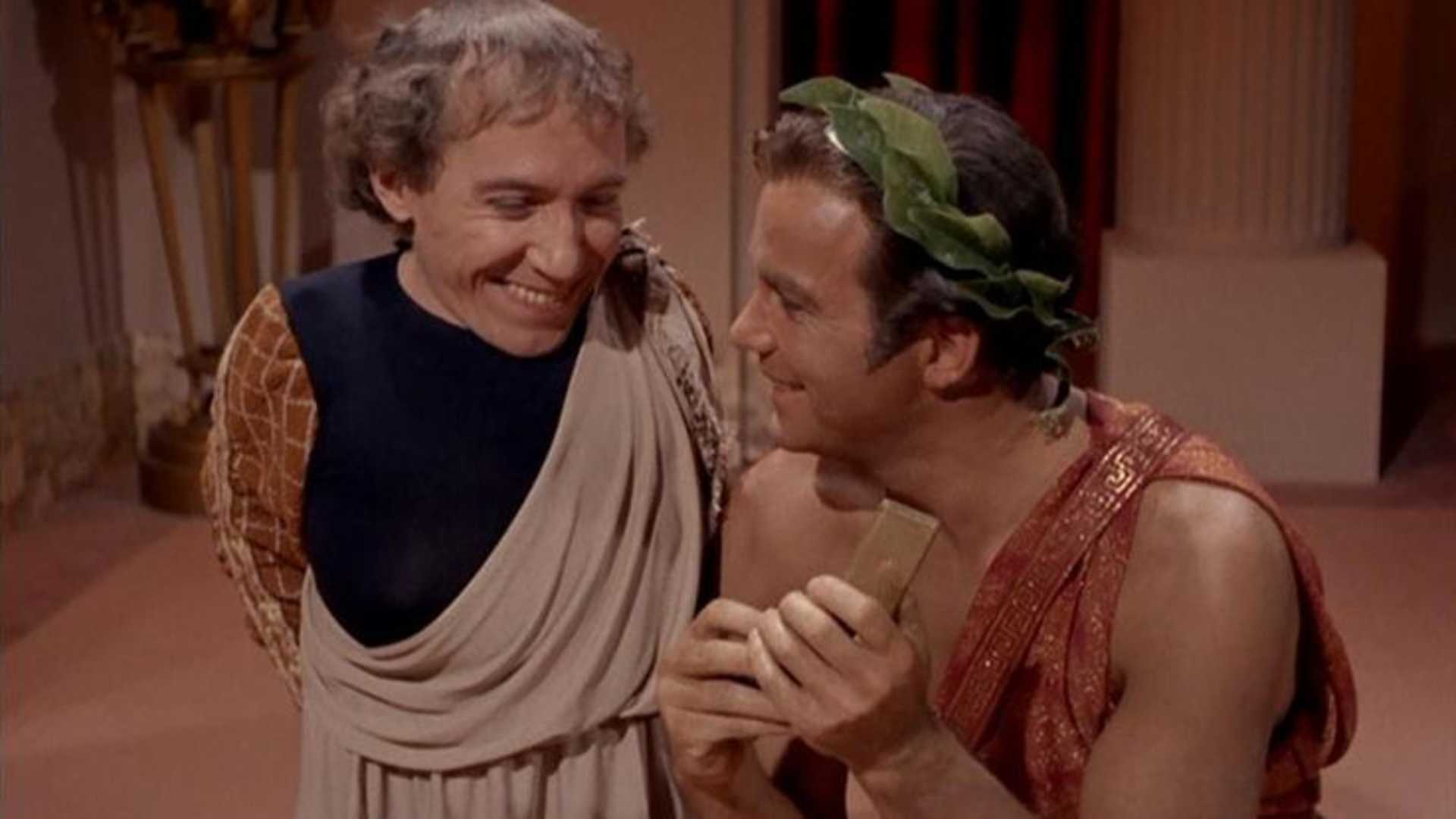
Alexander and Kirk smile together in Star Trek NBC -
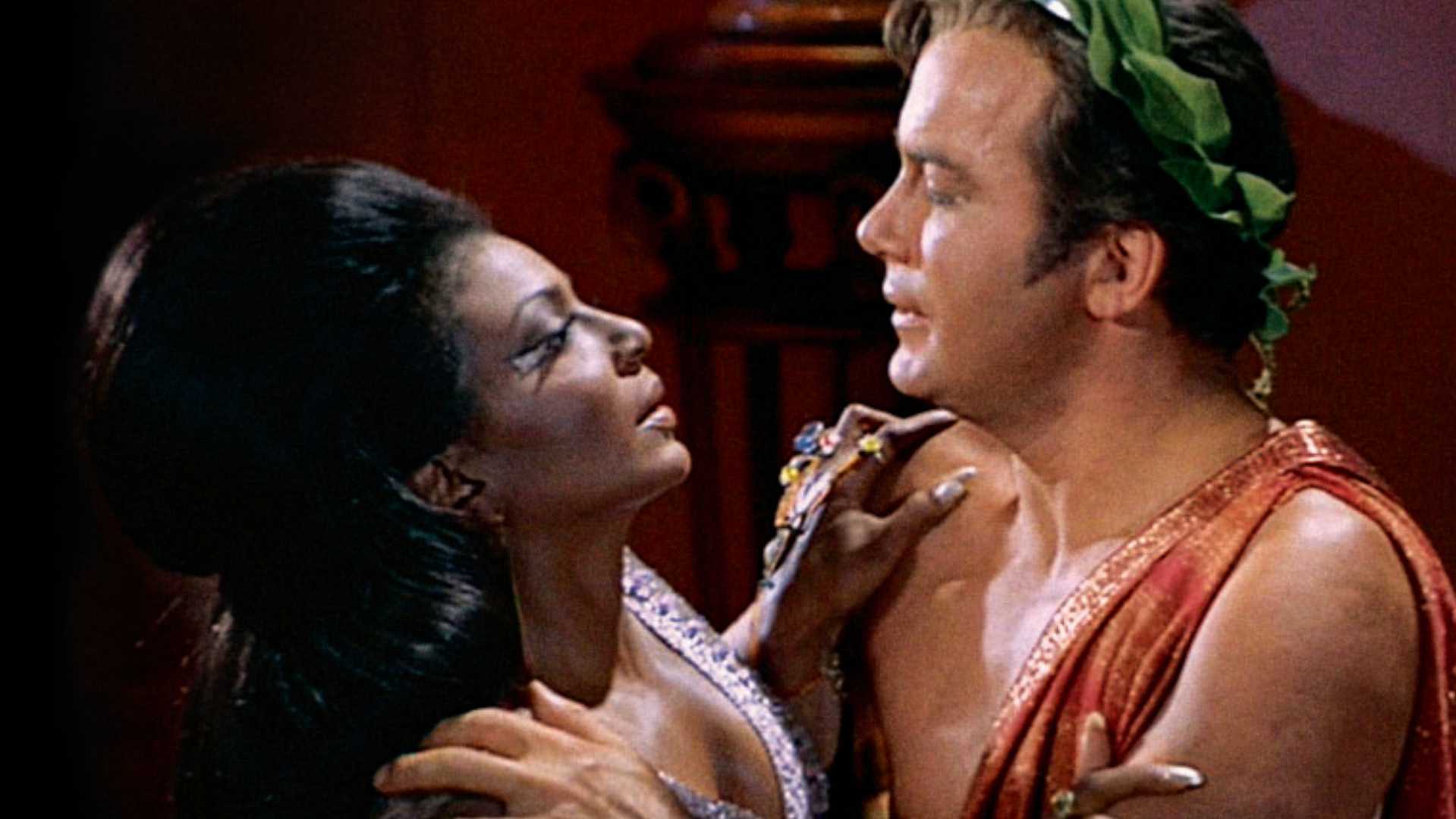
Uhura and Kirk prepare to kiss in Star Trek NBC
Despite Kirk delivering one of his best on-brand messages, “Plato’s Stepchildren” was widely notable for its scripted interracial kiss between Kirk and Uhura (Nichelle Nichols). This marked one of the earliest instances on U.S. television of a white character kissing a Black character.
This was monumentally important, as it spoke to the progressive ideals the show embraced from its inception. It also tied directly into Kirk’s quote about a person’s size, shape, and color having no bearing on their merit as a human being.
Remember, Star Trek was an aspirational TV show that framed futuristic space exploration as a device to confront modern issues. It envisioned humanity at its most morally righteous. Stating the line in a 1968 episode, around the time the American Civil Rights movement reached a pivotal period, gave the show a timely thematic resonance that has only grown stronger since.

- Release Date
-
1966 – 1969-00-00
- Network
-
NBC
- Directors
-
Marc Daniels, Joseph Pevney, Ralph Senensky, Vincent McEveety, Herb Wallerstein, Jud Taylor, Marvin J. Chomsky, David Alexander, Gerd Oswald, Herschel Daugherty, James Goldstone, Robert Butler, Anton Leader, Gene Nelson, Harvey Hart, Herbert Kenwith, James Komack, John Erman, John Newland, Joseph Sargent, Lawrence Dobkin, Leo Penn, Michael O’Herlihy, Murray Golden
- Writers
-
D.C. Fontana, Jerome Bixby, Arthur Heinemann, David Gerrold, Jerry Sohl, Oliver Crawford, Robert Bloch, David P. Harmon, Don Ingalls, Paul Schneider, Shimon Wincelberg, Steven W. Carabatsos, Theodore Sturgeon, Jean Lisette Aroeste, Art Wallace, Adrian Spies, Barry Trivers, Don Mankiewicz, Edward J. Lakso, Fredric Brown, George Clayton Johnson, George F. Slavin, Gilbert Ralston, Harlan Ellison